Tales

Wednesday, June 02, 2010

35 YEAR ANNIVERSARY OF THE FALL OF SAIGON


THE FALL OF 

INNOCENCE


                  Vietnam war 

                  Anniversary            

Posted by Rene Volpi  June 2- 2010


April 30th, 2010, was the 35th anniversary 

of the Fall of Saigon and the
end of the Vietnam War, and last month
on May 4th, was the 40th 
anniversary of the shooting of students 
at Kent State University. 
And for what? For protesting.  Let's 
never forget that atrocity. 
The Vietnam War and America's 
involvement in it affected the lives of 
millions for well over a decade. The 
United States military involvement and 
troop strength grew rapidly after 1964 - 
at its highest level in 1968, with over 
500,000 troops on the ground. And then, the
 unthinkable happened: The Tet offensive. 
This photographs--as graphic and terrifying as
 they are-- do not succeed in conveying the
 horror and suffering of those who were 
actually in the front lines, or in the cross-fire.
  As a French translator and  photojournalist
 for Sygma in that conflict (1970-75) I have
 witness the best and worst that humanity has
 to offer.
 The Vietnam Veterans Memorial in 
Washington, D.C. now bears the engraved
 names of 58,267 of those troops. It's nearly
 impossible to encapsulate an event of such 
scale in a handful of photographs, but here,
 35 years after the conflict ended, it is my
 sincere attempt.
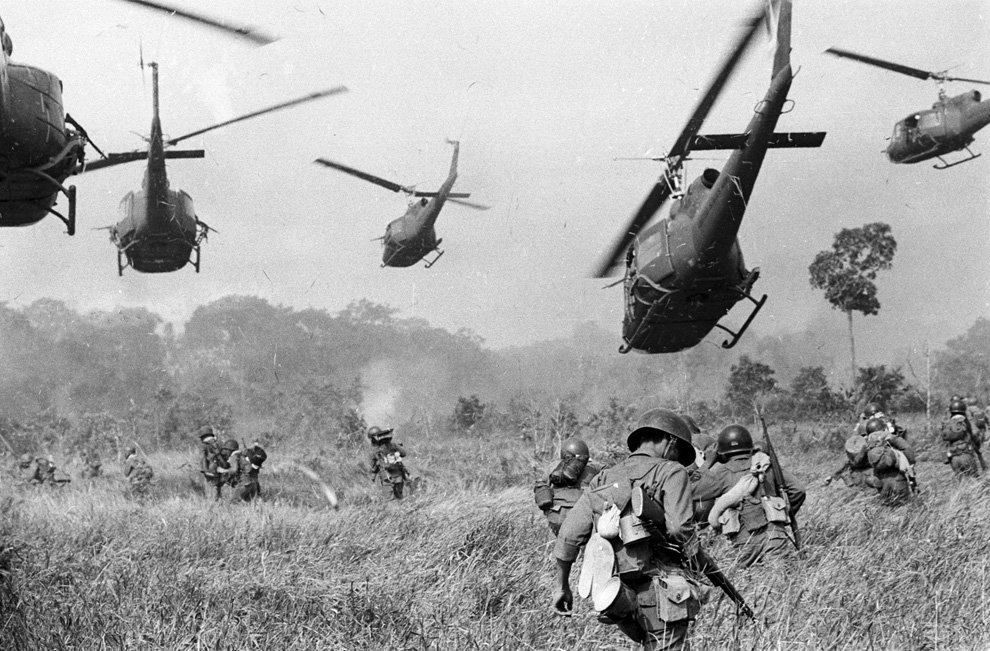
Hovering U.S. Army helicopters pour machine 
gun fire into a tree line to cover the advance
 of South Vietnamese ground 
troops in an attack on a Viet Cong camp 18 
miles north of Tay Ninh, northwest of Saigon 
near the Cambodian border, in Vietnam on 
March 1965. (AP Photo/Horst Faas)
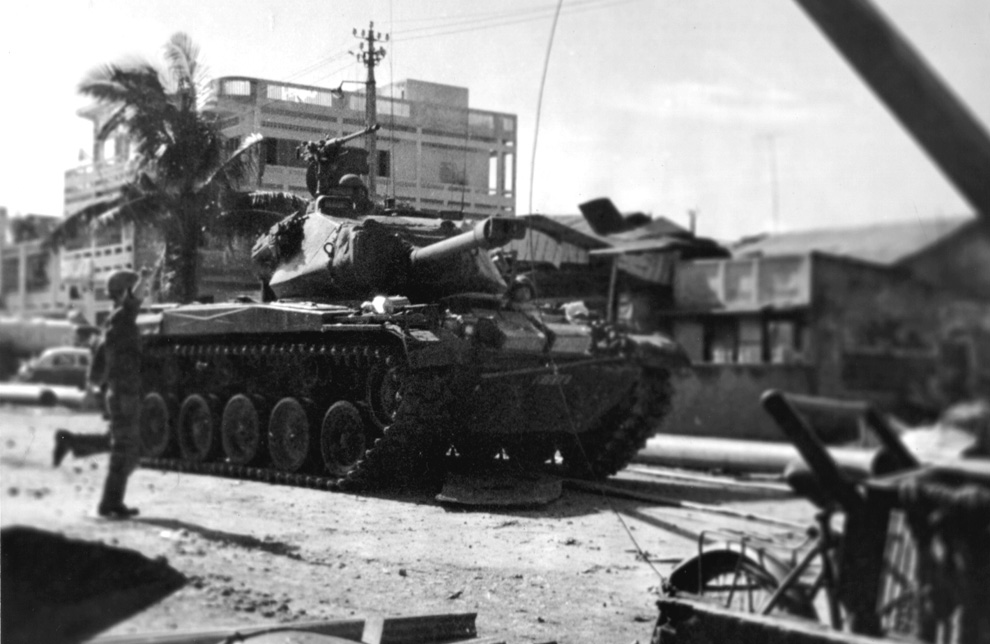
An M41 tank of the South Vietnamese Army advances on enemy
 positions in Saigon, Vietnam in May of 1960. (US Department 
of Defense) #
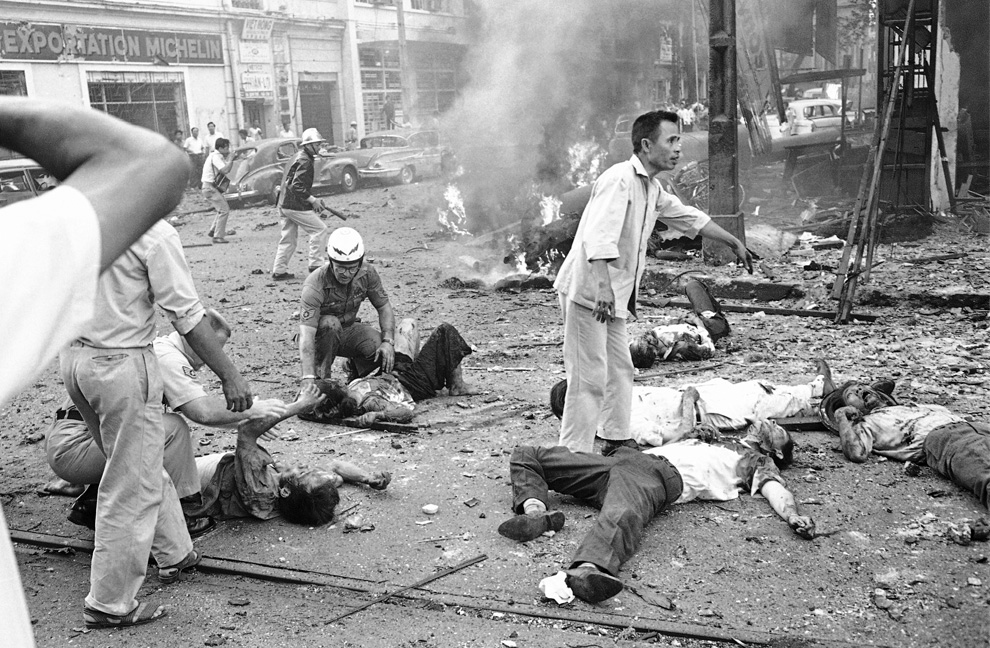
Injured Vietnamese receive aid as they lie on the street after a 
bomb explosion outside the U.S. Embassy in Saigon, Vietnam,
 March 30, 1965. Smoke rises from wreckage in background . At
 least two Americans and several Vietnamese were killed in the
 bombing. (AP Photo/Horst Faas) #
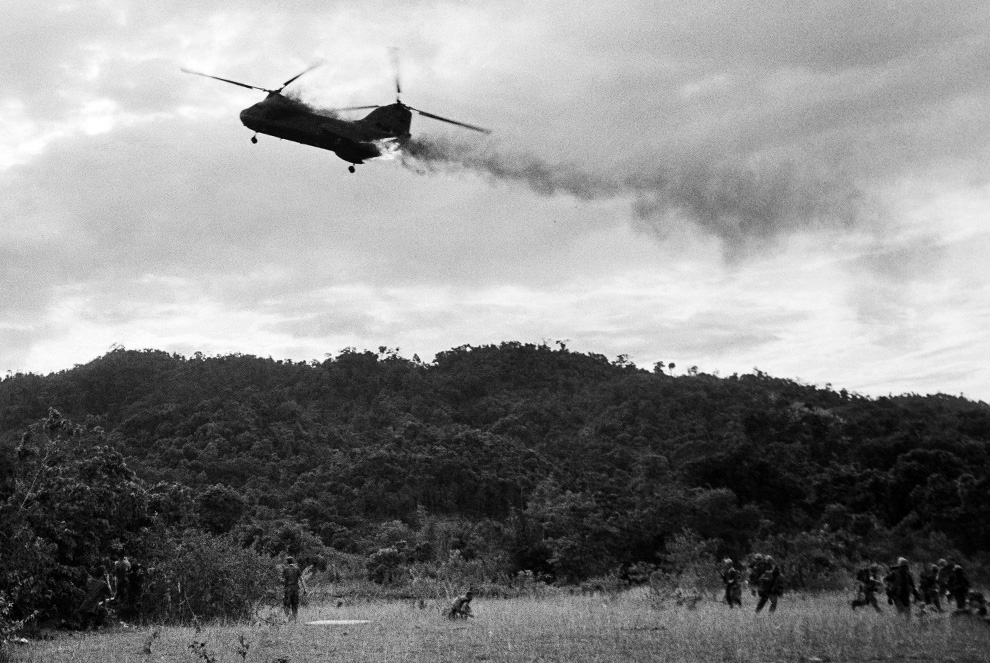
A U.S. Marine CH-46 Sea Knight helicopter comes down in
 flames after being hit by enemy ground fire during Operation
 Hastings, just south of the Demilitarized Zone between North and 
South Vietnam on July 15, 1966. The helicopter crashed and explo
ded on a hill, killing one crewman and 12 Marines. Three crewman
 escaped with serious burns. (AP Photo/Horst Faas) #
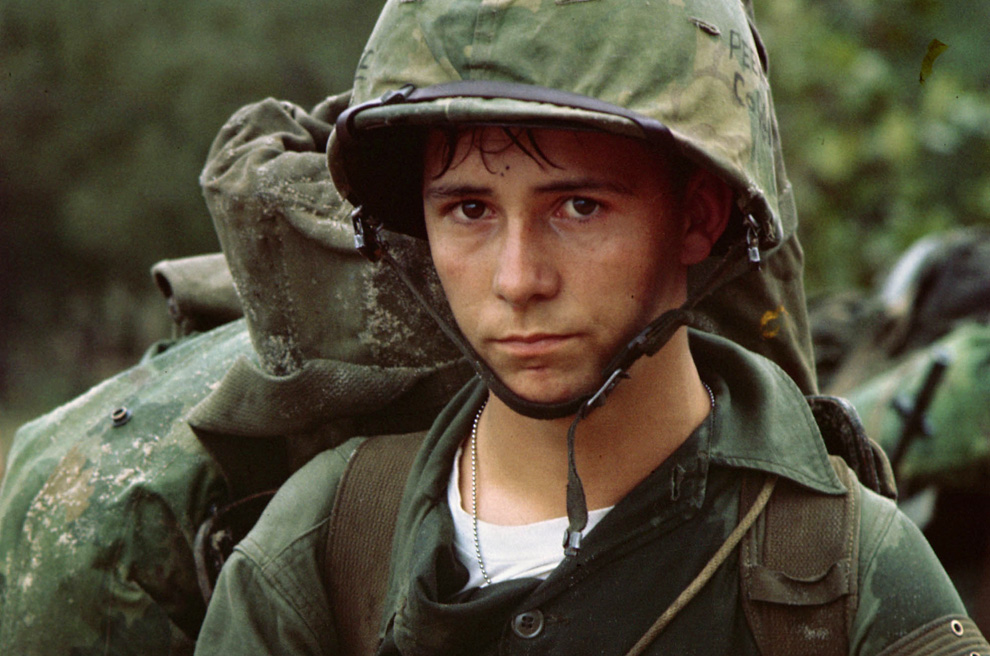
A young Marine private waits on the beach during the Marine lan
ding, Da Nang, Vietnam, August 3, 1965. (U.S. Marine Corps.) #
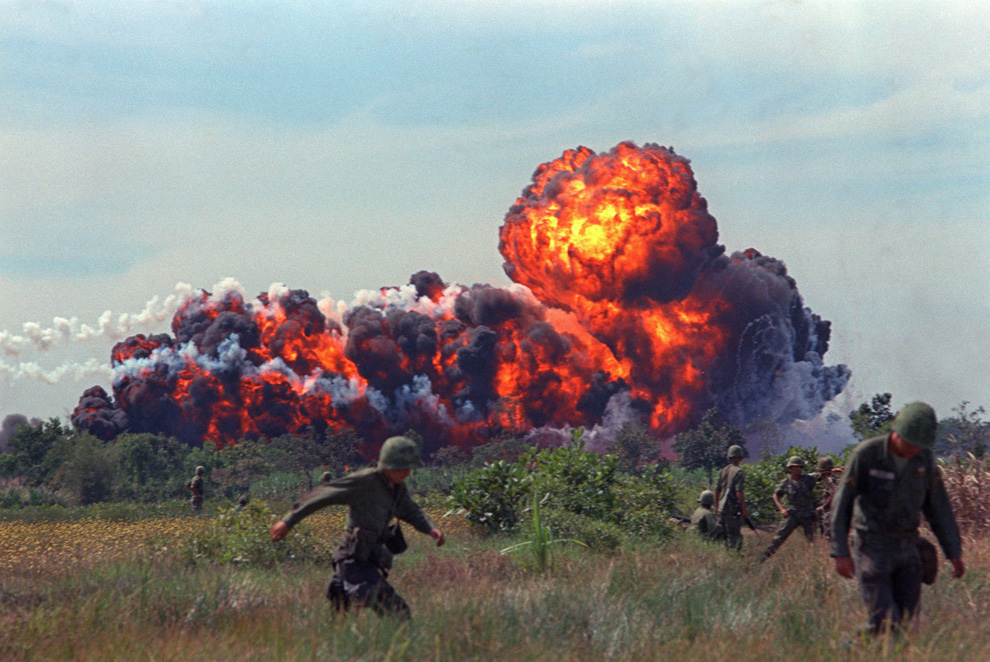
A napalm strike erupts in a fireball near U.S. troops on patrol in 
South Vietnam in 1966 during the Vietnam War. (AP Photo) #
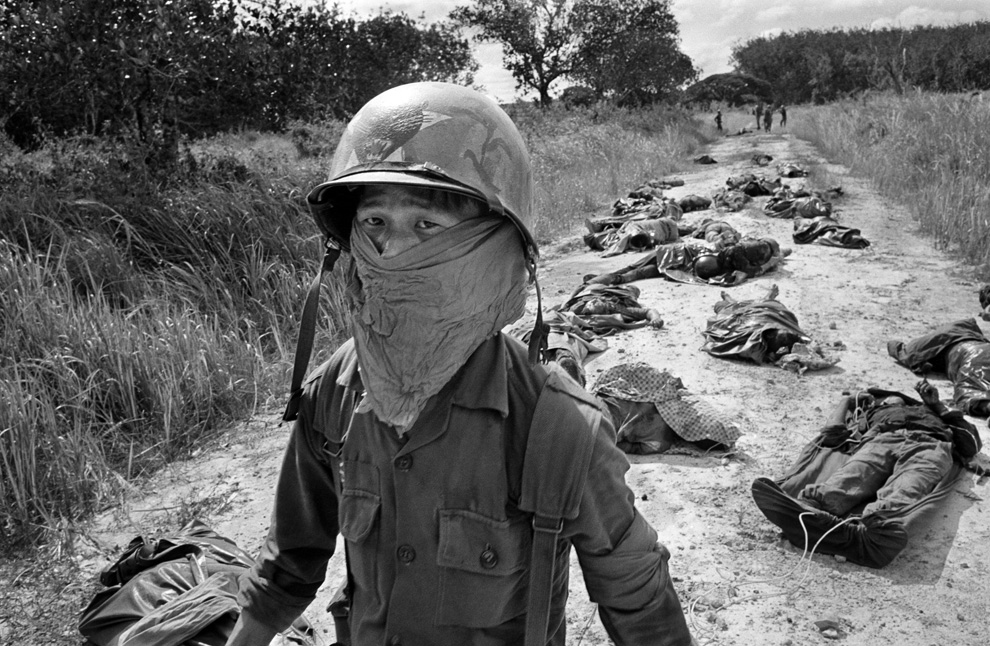
A Vietnamese litter bearer wears a face mask to keep out the 
smell as he passes the bodies of U.S. and Vietnamese soldiers
 killed in fighting against the Viet Cong at the Michelin rubber planta
tion, about 45 miles northeast of Saigon, Nov. 27, 1965. More than 
100 bodies were recovered after a human wave assault by guerrillas.
 (AP Photo/Horst Faas) #
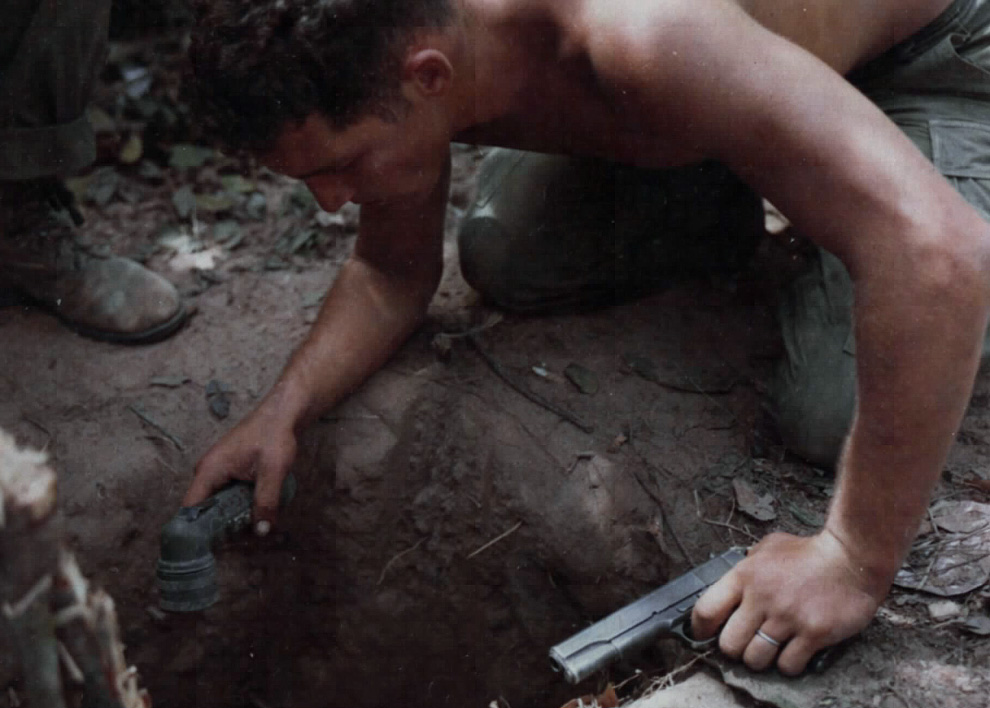
Sgt. Ronald A. Payne, from Atlanta, Georgia, Squad Leader of 
Company A, 1st Bn, 5th Infantry, 25th Infantry Division, checks a
 tunnel entrance carrying a flashlight and a sidearm, before entering it
 to search for Viet Cong and their equipment during Operation "Cedar
 Falls" in the Ho Bo Woods, 25 miles north of Saigon on January 
24th, 1967. (US Department of Defense/SP5 Robert C. Lafoon, US
 Army Sp Photo Det Pac) #
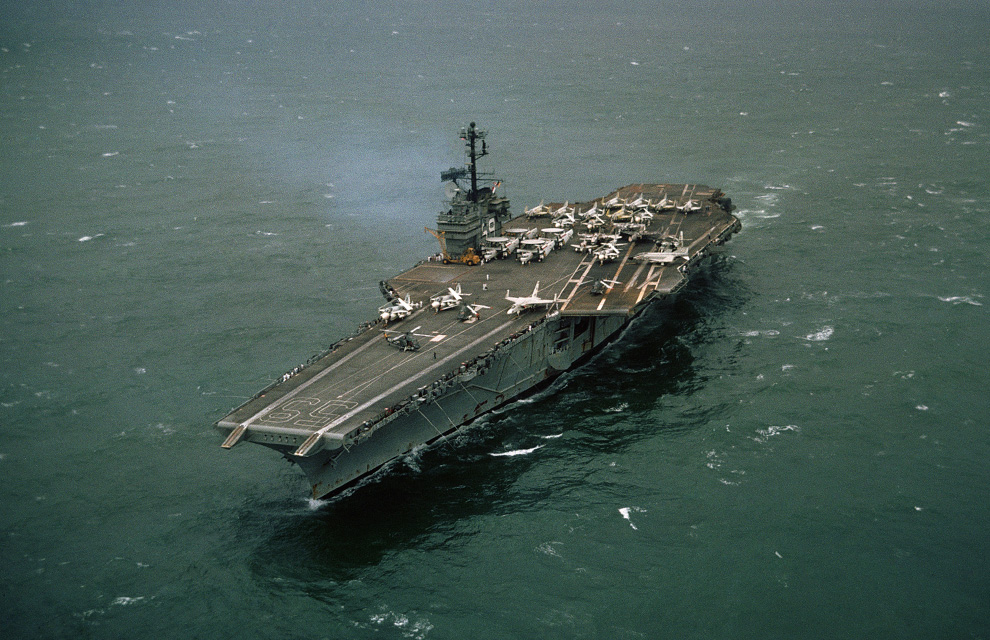
An aerial port bow view of the Forrestal Class Aircraft Carrier, 
USS Forrestal, underway approximately one month after fires and
 explosions damaged the ship leaving 132 crewmen dead, 62 injured,
 and two missing and presumed dead while on duty in waters off Viet
nam in July of 1967. (U.S. Navy/PHC H.L. WISE)#
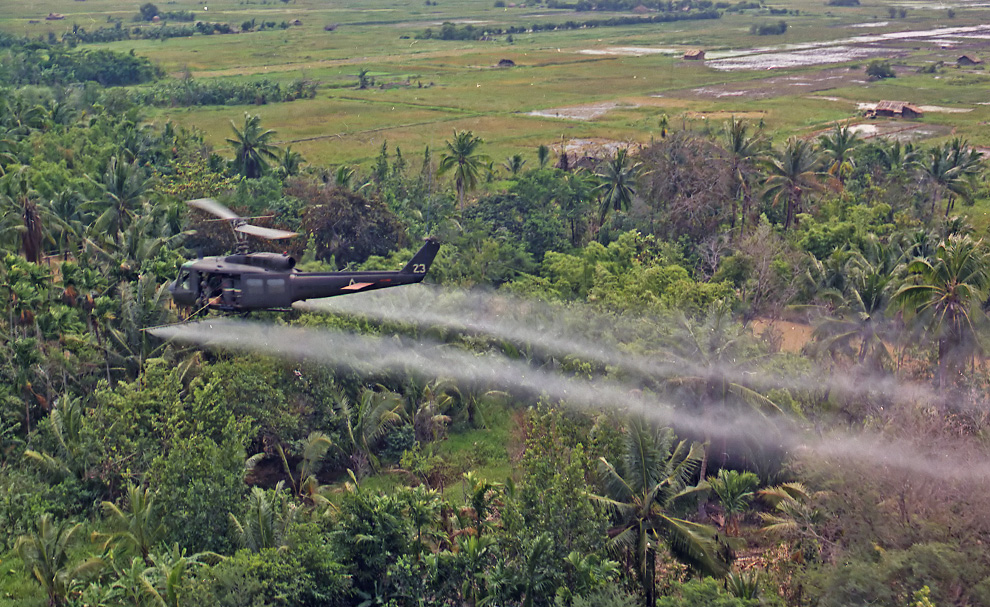
A UH-1D helicopter from the 336th Aviation Company sprays a 
defoliation agent on a dense jungle area in the Mekong delta. 
(US Department of Defense/Brian K. Grigsby, SPC5) #
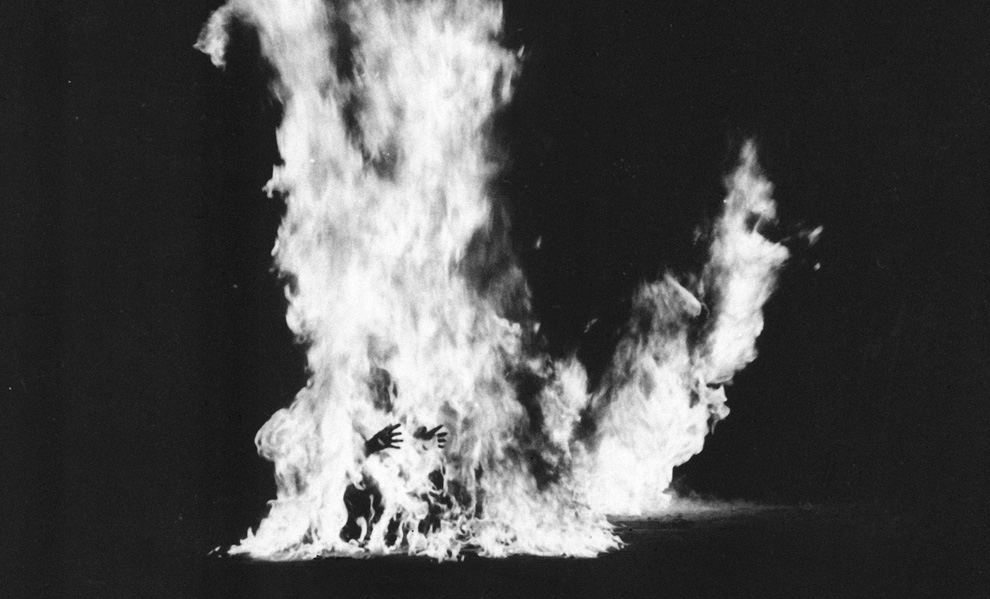
Buddhist nun Thich Nu Thanh Quang burns to death in an act of
 suicide protest against the government's Catholic regime at the
 Dieu de Pagoda in Hue, South Vietnam, May 29, 1966. (AP Photo) #
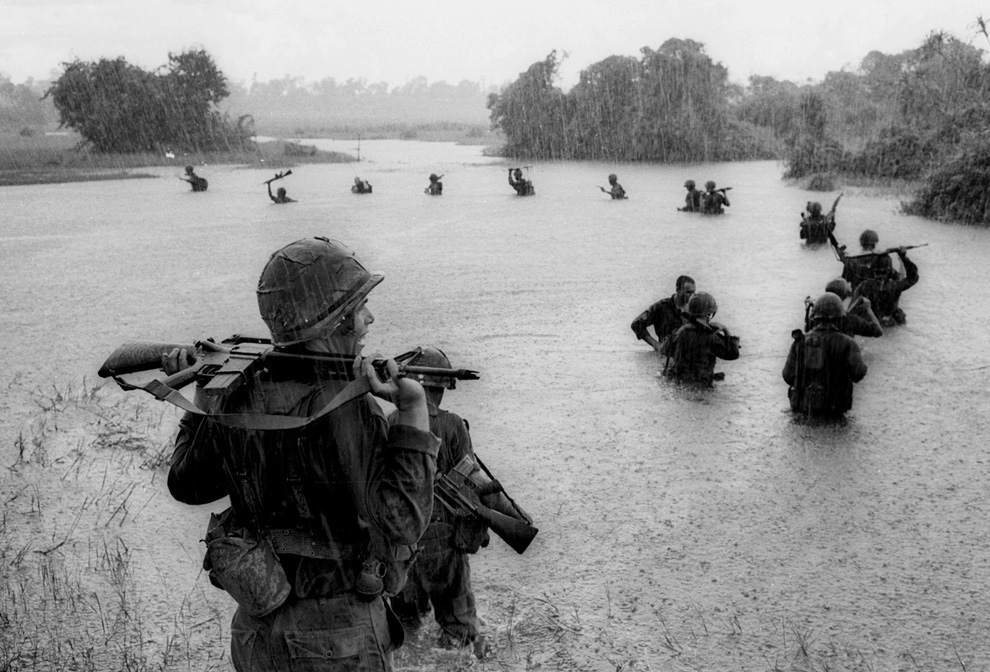
Paratroopers of the U.S. 2nd Battalion, 173rd Airborne Brigade
 hold their automatic weapons above water as they cross a river
 in the rain during a search for Viet Cong positions in the jungle area
 of Ben Cat, South Vietnam on Sept. 25, 1965. (AP Photo/Henri
 Huet) #

(1 of 3) South Vietnamese forces escort suspected Viet Cong 
officer Nguyen Van Lem (also known as Bay Lop) on a Saigon 
street Feb. 1, 1968, early in the Tet Offensive.
 (AP Photo/Eddie Adams) #
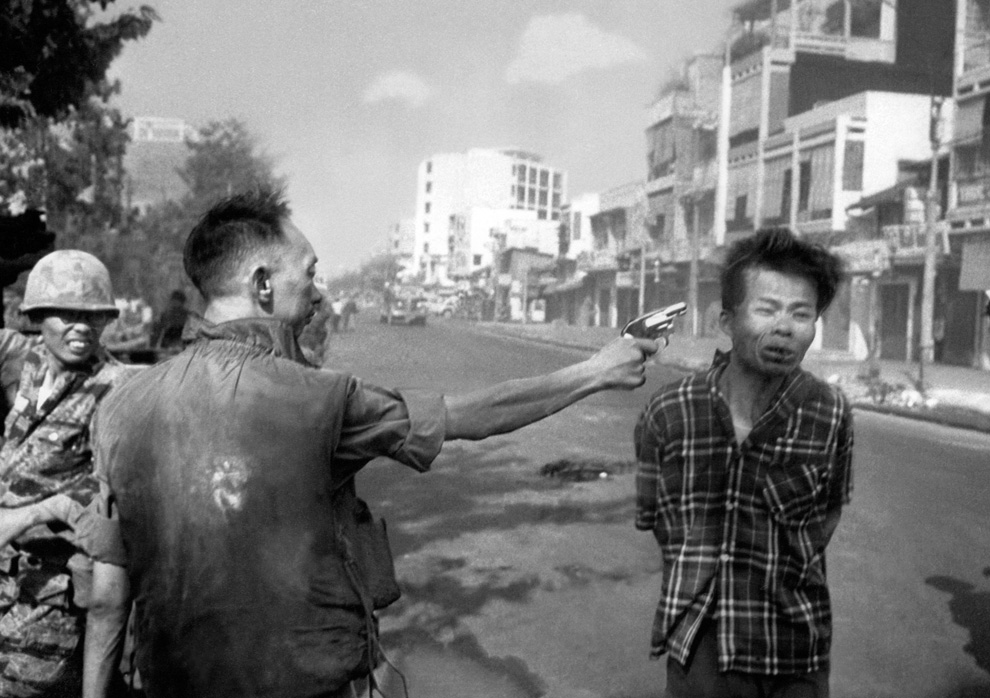
(2 of 3) South Vietnamese General Nguyen Ngoc Loan, chief of
 the national police, fires his pistol into the head of suspected 
Viet Cong officer Nguyen Van Lem on a Saigon street, on Feb. 1, 
1968. (AP Photo/Eddie Adams) #
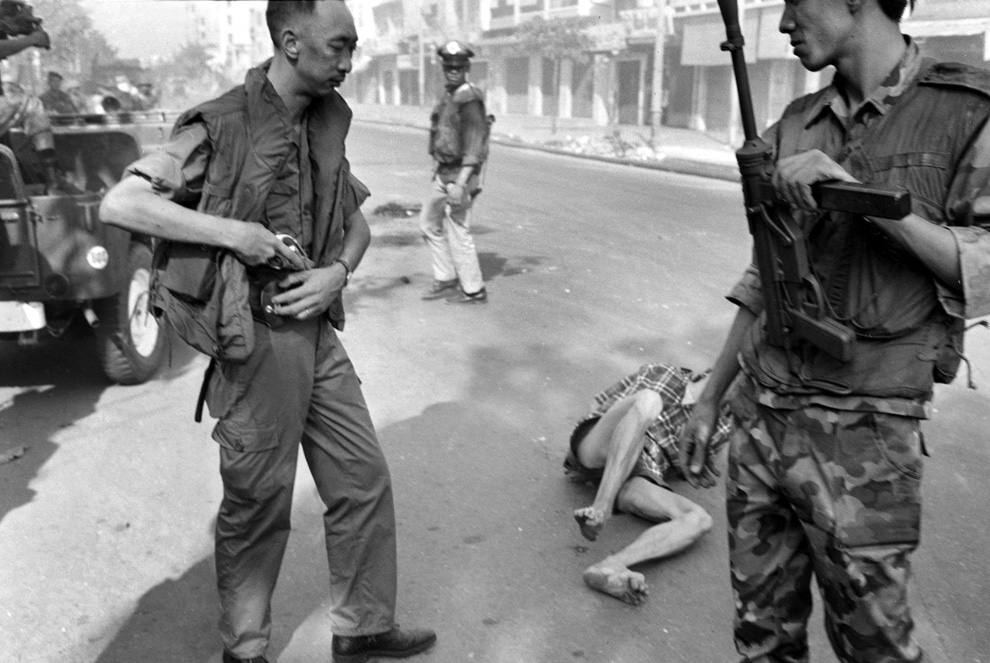
(3 of 3) South Vietnamese General Nguyen Ngoc Loan holsters
 his gun after executing suspected Viet Cong officer Nguyen
 Van Lem whose body lies on a Saigon street Feb. 1, 1968, early in
 the Tet Offensive. (AP Photo/Eddie Adams) #
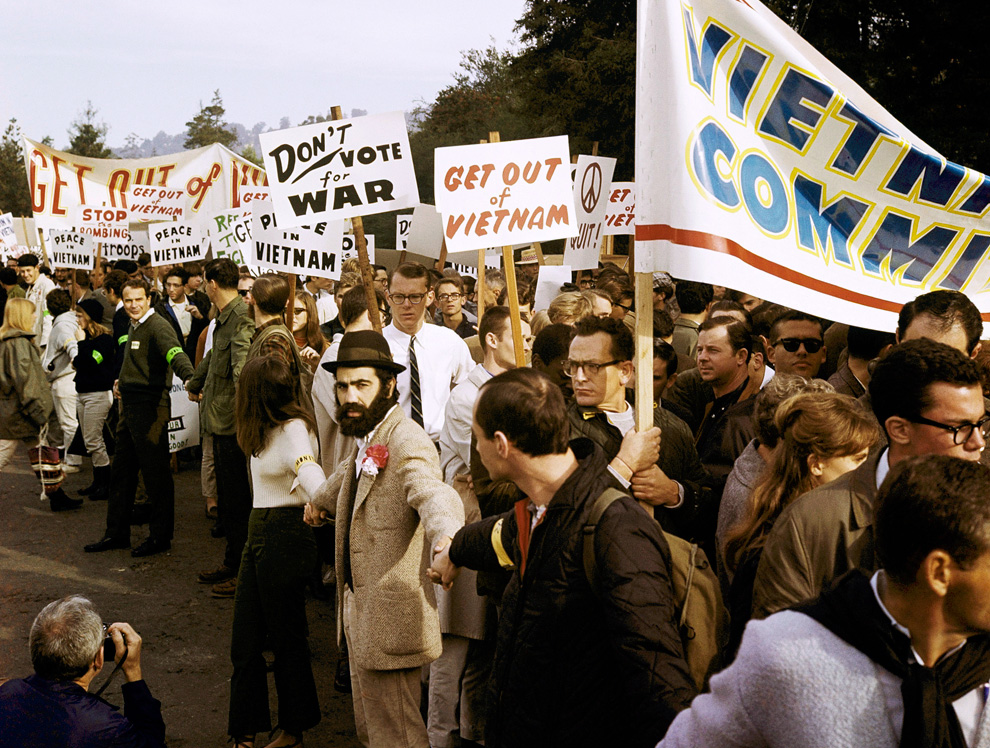
Demonstrators in Berkeley, California march against the war in
 Vietnam in December of 1965. (AP Photo) #
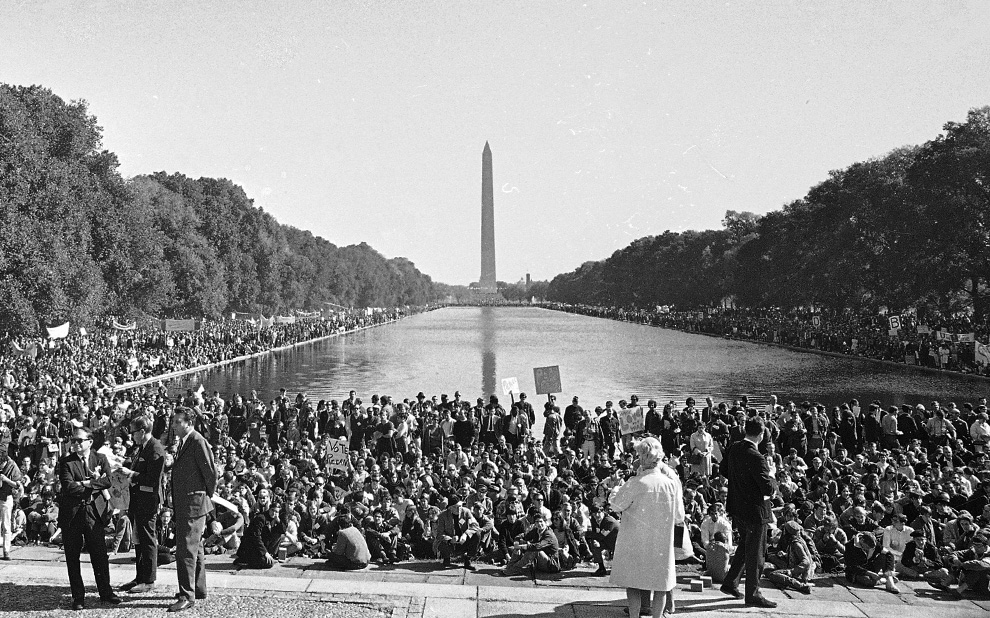
Anti-war protesters gather by the Reflecting Pool with the 
Washington Monument in the background, in Washington D.C.
 on Oct. 21, 1967. (AP Photo) #
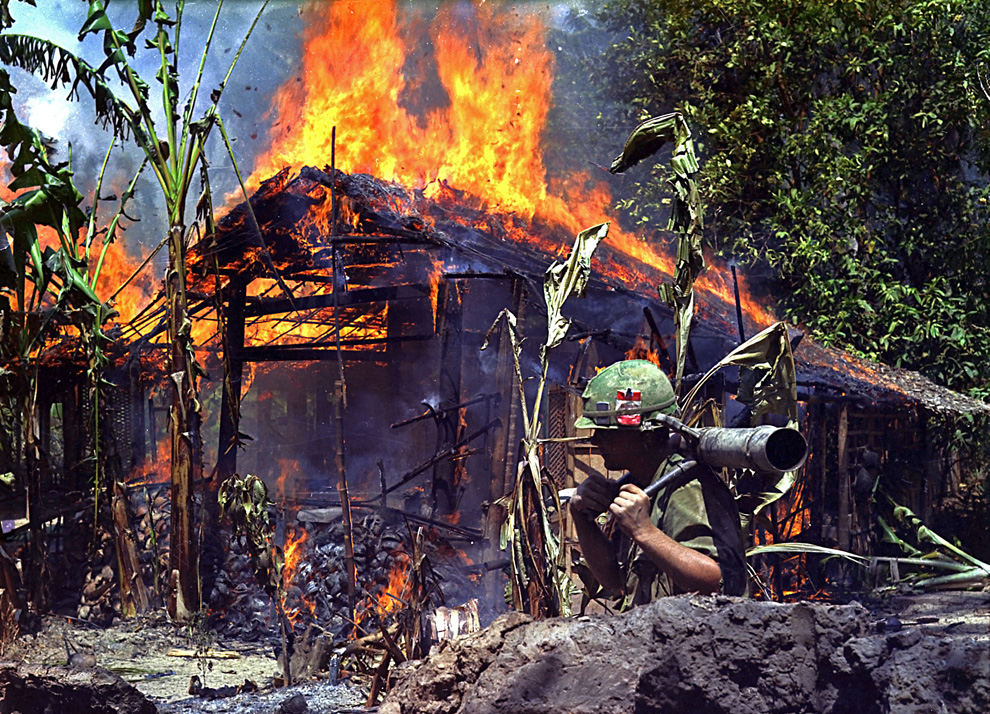
A Viet Cong base camp is torched near My Tho, Vietnam on 
April 5th, 1968. In the foreground is Private First Class Raymond 
Rumpa, St Paul, Minnesota, C Company, 3rd Battalion, 47th Infan
try, 9th Infantry Division, with 45 pound 90mm recoilless rifle. (US 
Department of Defense) #
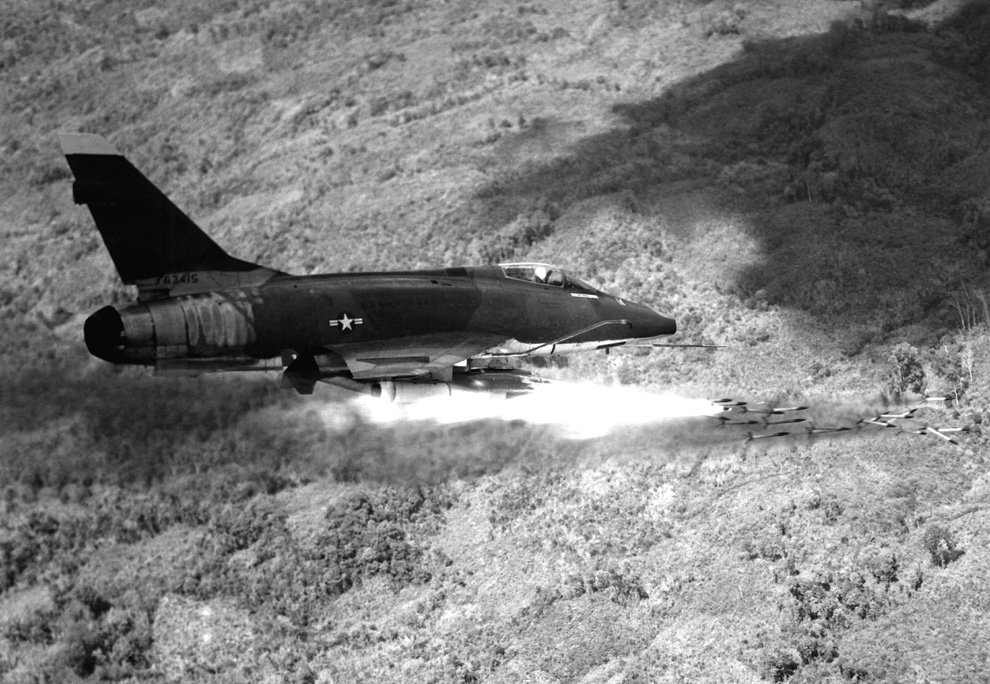
An Air Force F-100D Super Sabre aircraft fires a salvo of 2.75-
inch rockets against an enemy position in South Vietnam on Ja
nuary 1st, 1967. (US Department of Defense) #
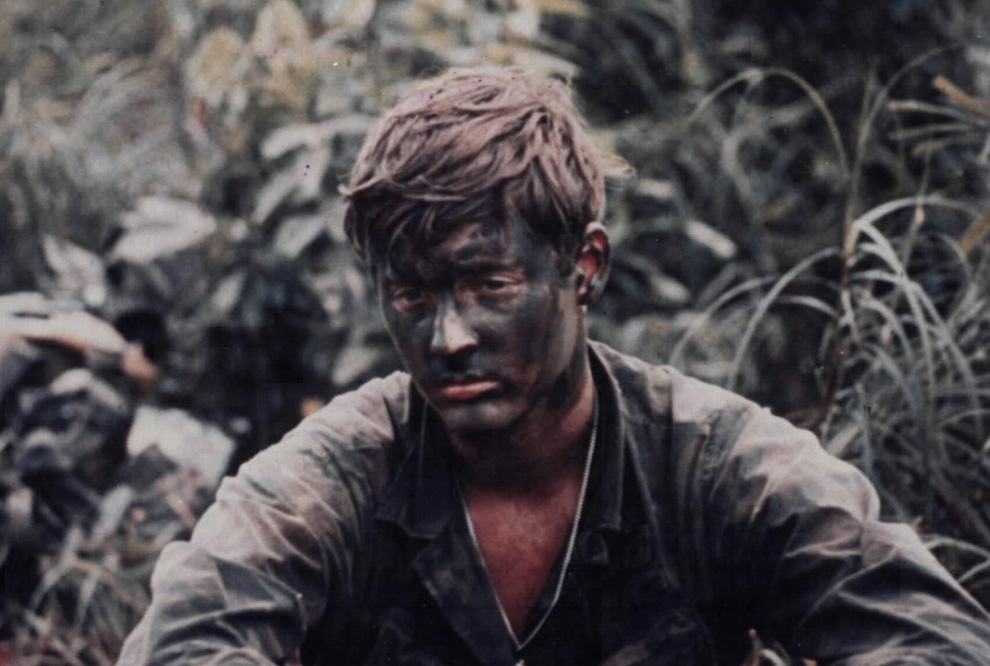
During Operation "Bushmaster", a member of Company "L", 
(Ranger), 75th Infantry, wearing camouflage makeup sits alone
 with his thoughts while waiting to participate in an assault mission
 against North Vietnamese Army (NVA) forces in Vietnam in August 
of 1971. (US Department of Defense/SP4 John L. Hennesey, 221st
 Sig Co) #
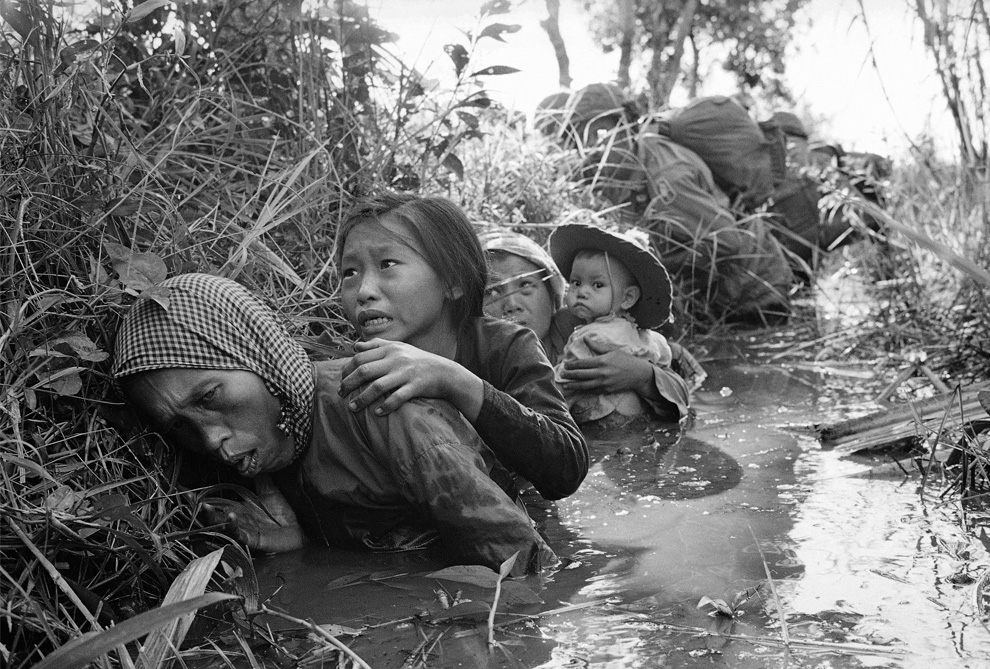
Women and children crouch in a muddy canal as they take
 cover from intense Viet Cong fire at Bao Trai, about 20 miles
 west of Saigon, Vietnam on Jan. 1, 1966. (AP Photo/Horst Faas) #
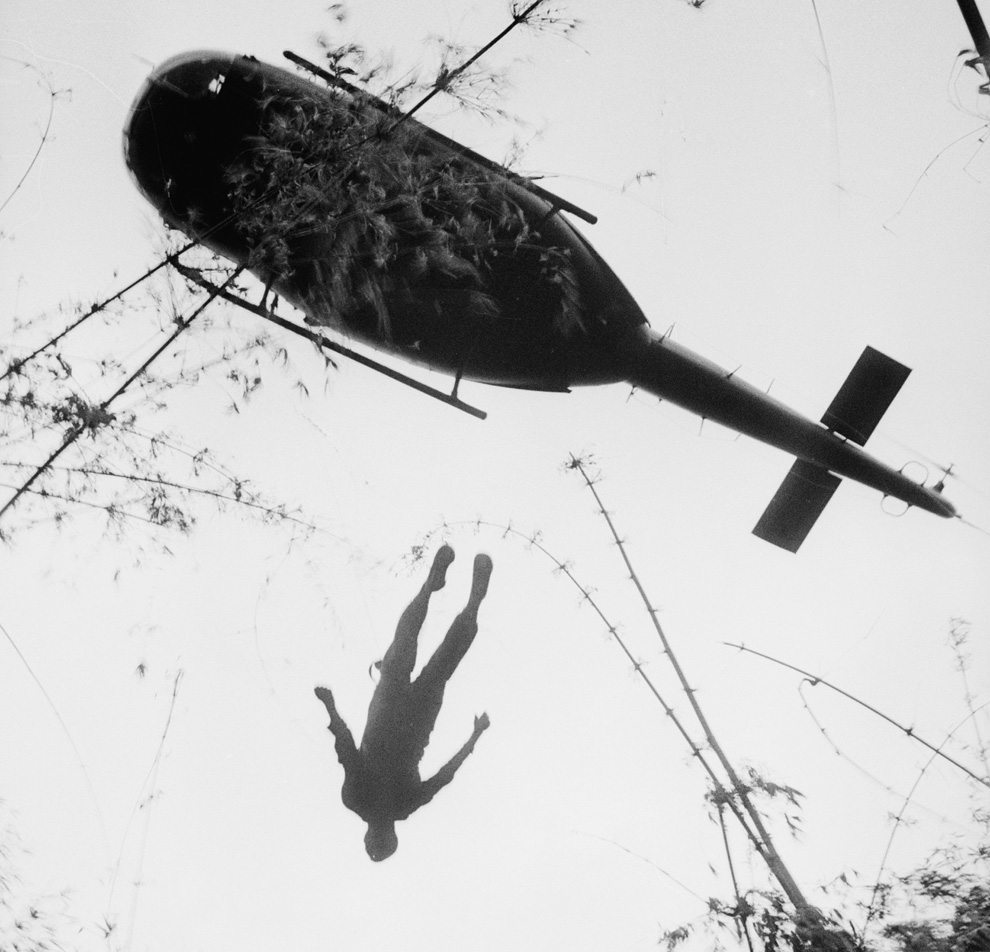
The body of an American paratrooper killed in action in the jun
gle near the Cambodian border is raised up to an evacuation heli
copter in War Zone C, Vietnam in 1966. (AP Photo/Henri Huet) #

U.S. Marines emerge from their muddy foxholes at sunrise after 
a third night of fighting against continued attacks of north Vietna
mese 324 B division troops during the Vietnam War on Sept. 21,
 1966. (AP Photo/Henri Huet) #
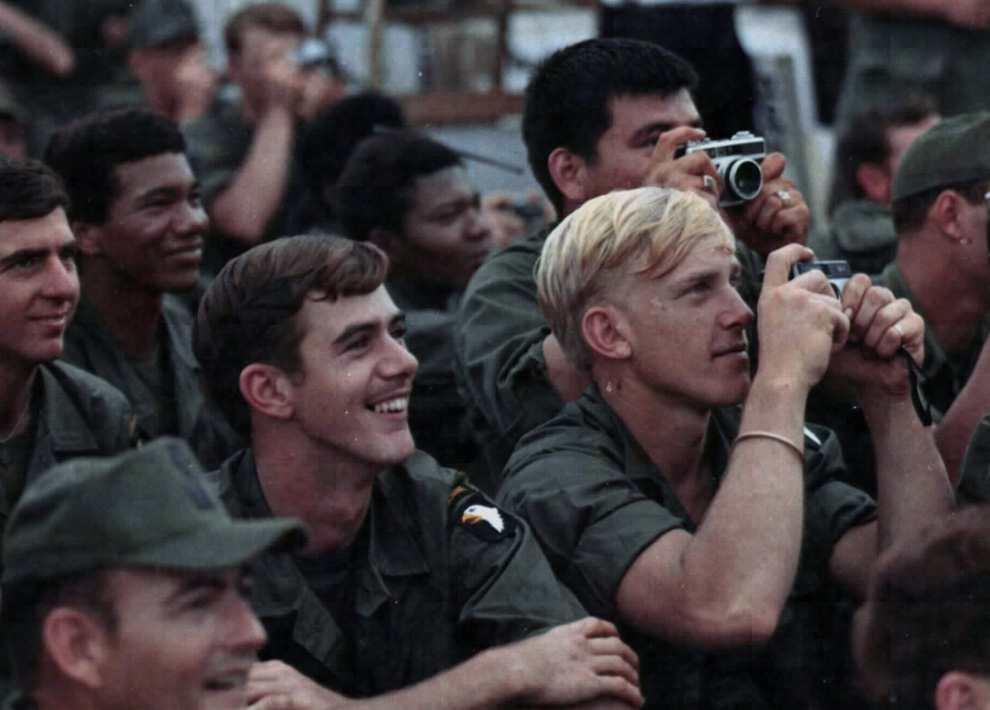
 And at last but not least the guys from the 82nd get a well deserved respite.


This culminate Part 1 of this series,  Part 2 will be posted on Friday Noon.  Don't miss it !!
POSTED JUNE 2, 2010 BY RENÉ VOLPI  


Saturday, May 29, 2010

Justice Finally on Hand for the Cambodian People


Light at the end of a very long tunnel

Posted by René Volpi ,  Saturday May 29- 2010
Comrade Duch in the dock
It has taken more than 30 years to bring the perpetrators of the Khmer Rouge excesses to justice. On Monday 26 July we will at last hear the verdict in the first trial of the ECCC, that of Comrade Duch, head of the infamous Tuol Sleng/S-21 prison. He stands accused of crimes against humanity and much more besides. He's been in detention since 1999 and deserves to remain incarcerated for the rest of his days. The trial itself began in March of last year and ended in November. I attended just once on the day that David Chandler gave his expert testimony. It was clear to me that Duch was enjoying his moment in the spotlight, and though he has freely acknowledged his role as the head of S-21, he didn't tell the whole truth and only revealed what he wanted us to know. His defense focused on the premise that he acted out of fear for his life and whilst that may've been partly true, his culpability as head of the interrogation and extermination center tells a very different story. This man is responsible for at least 12,000 deaths, and probably many more, and deserves whatever the trial judges can throw at him. His remorse is a sham and his guilt is clear, even though his former S-21 colleagues were less than forthcoming in their time on the stand. Nevertheless, the paper trail left by the Khmer Rouge and his own admissions, have sealed his fate. The trial for case 002, four of the leading members of the Khmer Rouge hierarchy, is unlikely to begin before the end of this year.  I, personally cannot wait...

Thursday, May 27, 2010

The BP Disaster (part 1)


DISASTER UNFOLDS IN GULF

Posted by Rene Volpi. Compilation by Alan Taylor on Thursday, May 28, 2010


In the three weeks since the April 20th explosion and sinking of the Deepwater Horizon oil rig in the Gulf of Mexico, and the start of the subsequent massive (and ongoing) oil leak, many attempts have been made to contain and control the scale of the environmental disaster. Oil dispersants are being sprayed, containment booms erected, protective barriers built, controlled burns undertaken, and devices are being lowered to the sea floor to try and cap the leaks, with little success to date. While tracking the volume of the continued flow of oil is difficult, an estimated 5,000 barrels of oil (possibly much more) continues to pour into the gulf every day. While visible damage to shorelines has been minimal to date as the oil has spread slowly, the scene remains, in the words of President Obama, a "potentially unprecedented environmental disaster." (40 photos total)

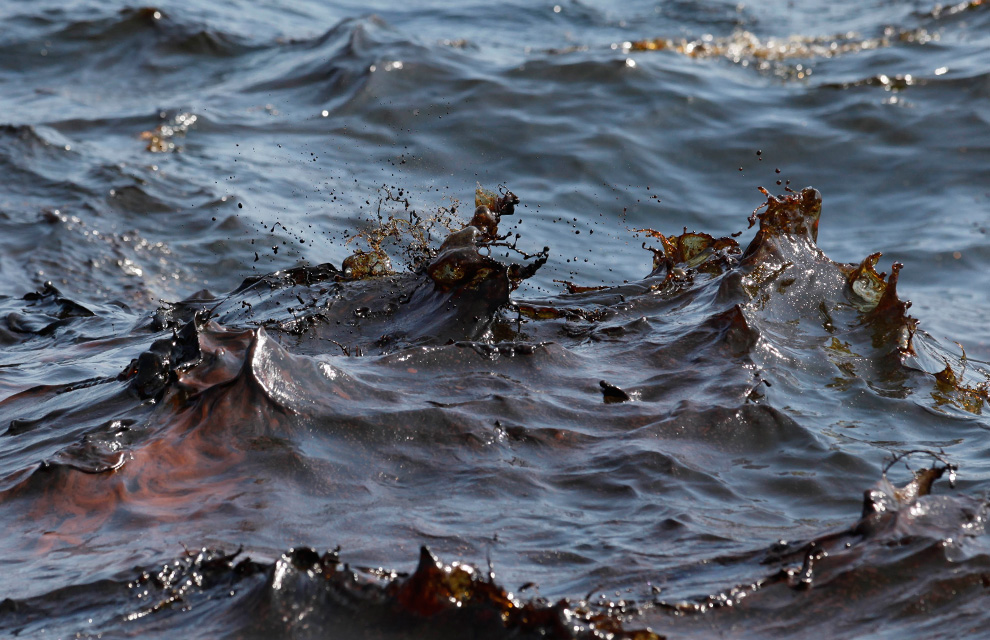
Seawater covered with thick black oil splashes up in brown-stained whitecaps off the side of the supply vessel Joe Griffin at the site of the Deepwater Horizon oil spill containment efforts in the Gulf of Mexico off the coast of Louisiana Sunday, May 9, 2010. (AP Photo/Gerald Herbert)


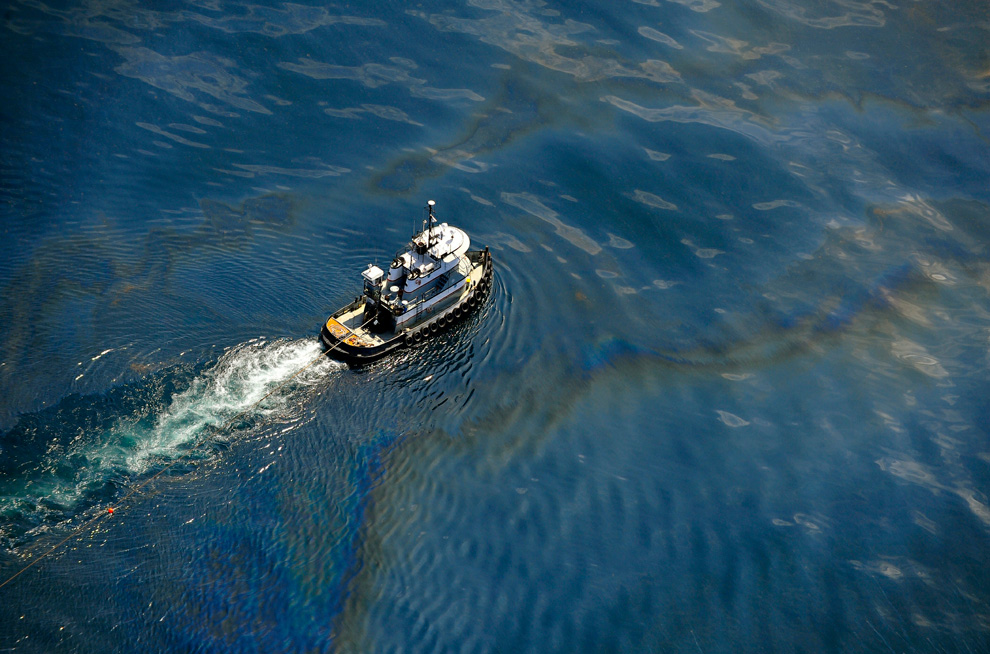
A tugboat moves through the oil slick on May 6, 2010 in the Gulf of Mexico. (Michael B. Watkins/U.S. Navy via Getty Images) #

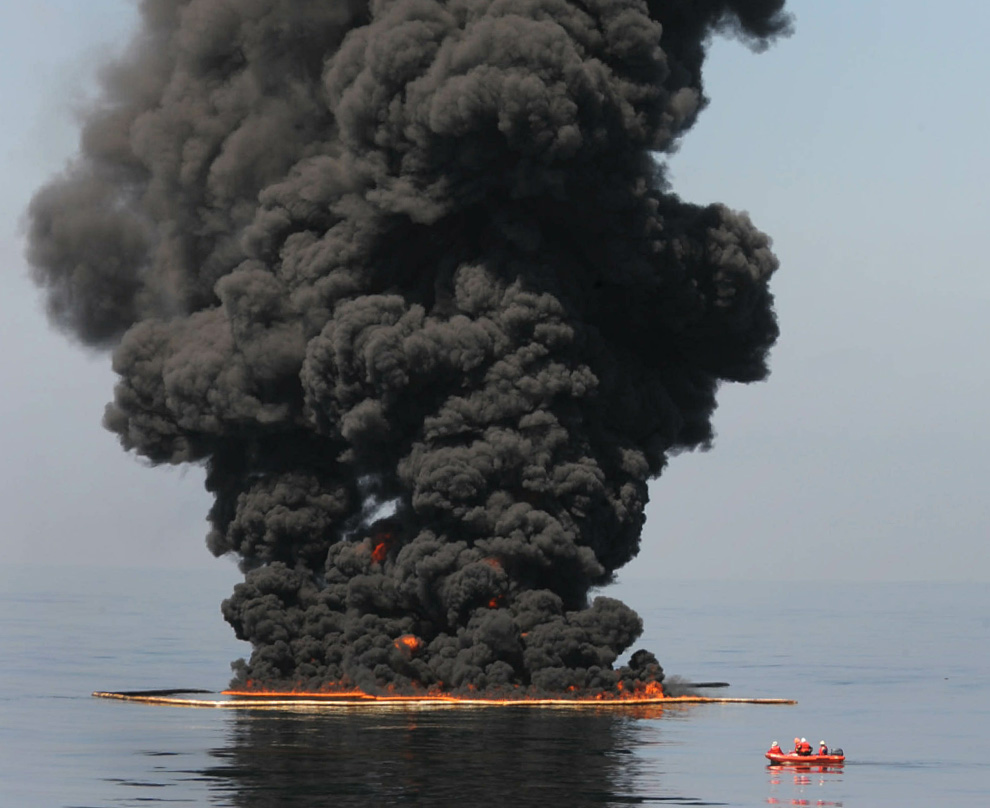
Oil burns during a controlled fire May 6, 2010 in the Gulf of Mexico. The U.S. Coast Guard is overseeing oil burns after the sinking, and subsequent massive oil leak, from the sinking of the Deepwater Horizon oil platform off the coast of Louisiana. (Justin E. Stumberg/U.S. Navy via Getty Images) #

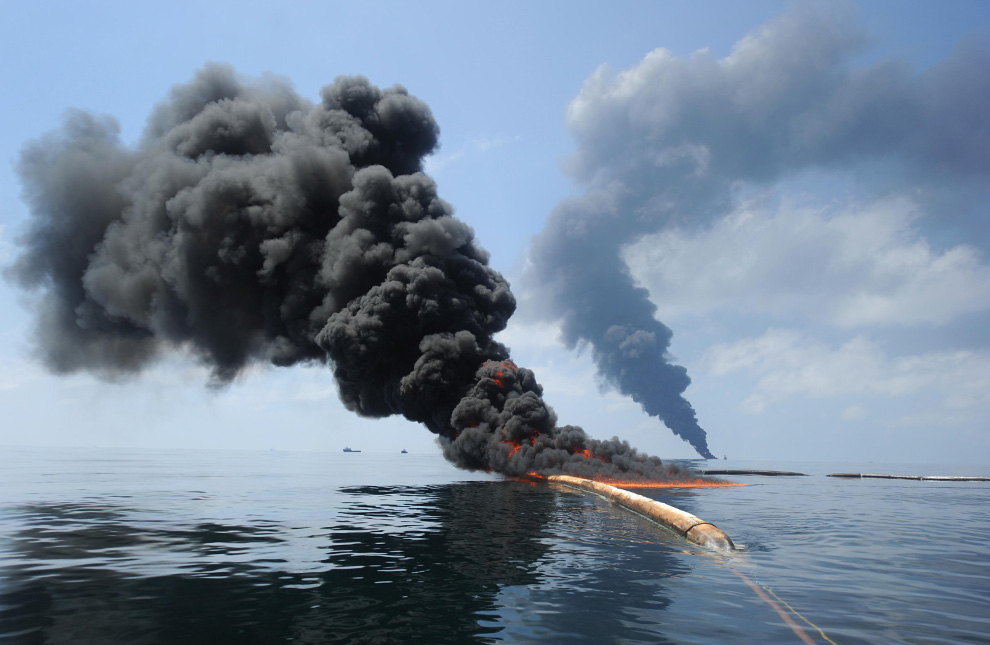
Dark clouds of smoke and fire emerge as oil burns during a controlled fire in the Gulf of Mexico, May 6, 2010. The U.S. Coast Guard working in partnership with BP PLC, local residents, and other federal agencies conducted the "in situ burn" to aid in preventing the spread of oil. (REUTERS/Mass Communication Specialist 2nd Class Justin Stumberg-US Navy) #

The crew of a Basler BT-67 fixed wing aircraft releases oil dispersant over parts of the oil spill off the shore of Louisiana in this May 5, 2010 photograph. (REUTERS/Stephen Lehmann/U.S. Coast Guard) #

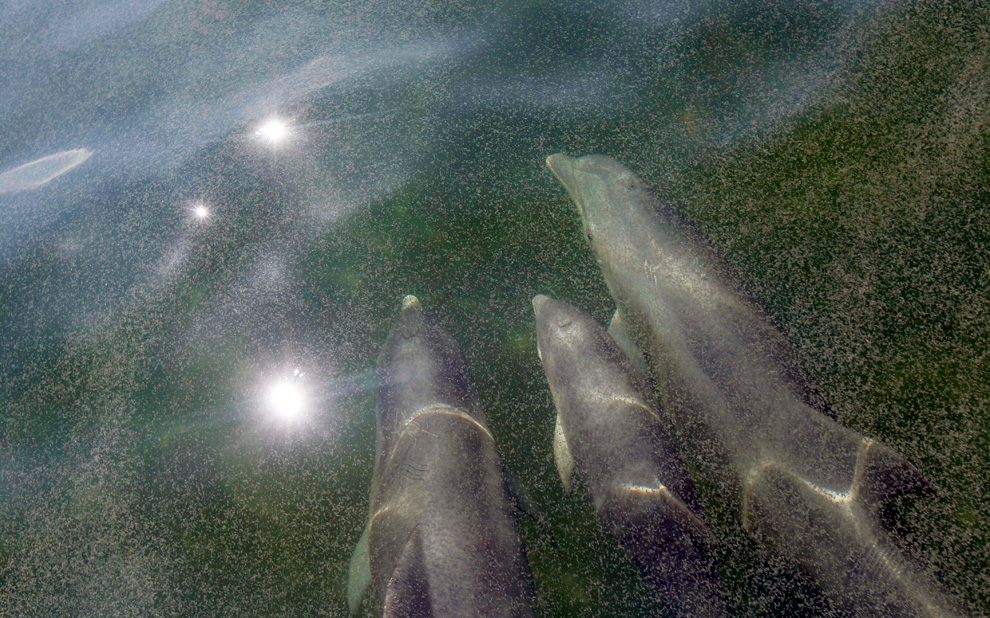
A pod of Bottlenose dolphins swim under the oily water Chandeleur Sound, Louisiana, Thursday, May 6, 2010 in the Gulf of Mexico. (AP Photo/Alex Brandon) #

Winds cause ripples to form on the water of grassy marsh wetlands in St. Bernard Parish, Louisiana, as work continues to try to protect it from the massive oil spill on May 9, 2010 in Gulf of Mexico. (Joe Raedle/Getty Images) #

A worker with one of the shoreline clean-up crews deploys a snare boom on the west side of the South Pass near Port Eades, Louisiana May 11, 2010. (REUTERS/Sean Gardner) #

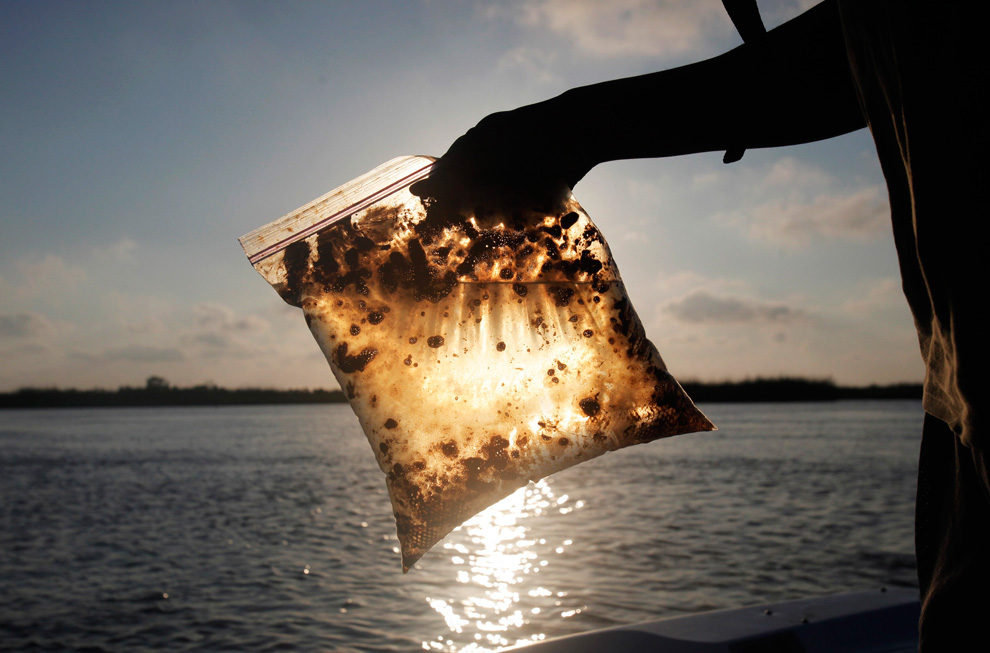
A man holds a plastic bag with seawater and oil from the Gulf of Mexico oil spill south of Freemason Island, Louisiana May 7, 2010. (REUTERS/Carlos Barria) #

An oil-stained cattle egret rests on the deck of the supply vessel Joe Griffin at the site of the Deepwater Horizon oil spill containment efforts in the Gulf of Mexico off the coast of Louisiana, Sunday, May 9, 2010. (AP Photo/Gerald Herbert) #

Oily water is seen off the side of the Joe Griffin supply vessel at the site of the Deepwater Horizon oil spill containment efforts in the Gulf of Mexico on Saturday, May 8, 2010. (AP Photo/Gerald Herbert) #

A helicopter takes off from the helipad of the Development Driller III, which is drilling the relief well at the site of the Deepwater Horizon oil spill, in the Gulf of Mexico on May 11, 2010. (REUTERS/Gerald Herbert) #

Oil washes onto the sides of a 100-ton concrete-and-steel pollution containment chamber as the mobile offshore drilling unit Q4000 lowers it into the water at the Deepwater Horizon site on May 6, 2010 in the Gulf of Mexico . The chamber was designed to cap the oil discharge that was a result of the Deepwater Horizon incident. (Patrick Kelley/U.S. Coast Guard via Getty Images) #

The single cable supporting the 100-ton oil containment device being lowered to the sea floor disappears into Gulf waters off the side of the Q400 mobile drilling platform on Sunday, May 9, 2010. Efforts to contain the leak with the device were unsuccessful due to ice crystals forming in its domed roof. (AP Photo/Gerald Herbert) #

One of the New harbor Islands is protected by two oil booms against the oil slick that has passed inside of the protective barrier formed by the Chandeleur Islands, as cleanup operations continue for the BP Deepwater Horizon platform disaster off Louisiana, on May 10, 2010. (MARK RALSTON/AFP/Getty Images) #

Workers attempt to secure an oil boom into place in an effort to protect the coast line from the massive oil spill near Hopedale, Louisiana May 10, 2010. (REUTERS/Sean Gardner) #

Blobs of oil from the massive spill float on the surface of the water on May 5, 2010 in Breton and Chandeleur sounds off the coast of Louisiana. (Joe Raedle/Getty Images) #

Crews build a sand berm to protect the island from the potential of oil washing onshore, on Dauphin Island, Alabama May 10, 2010. (REUTERS/Brian Snyder) #

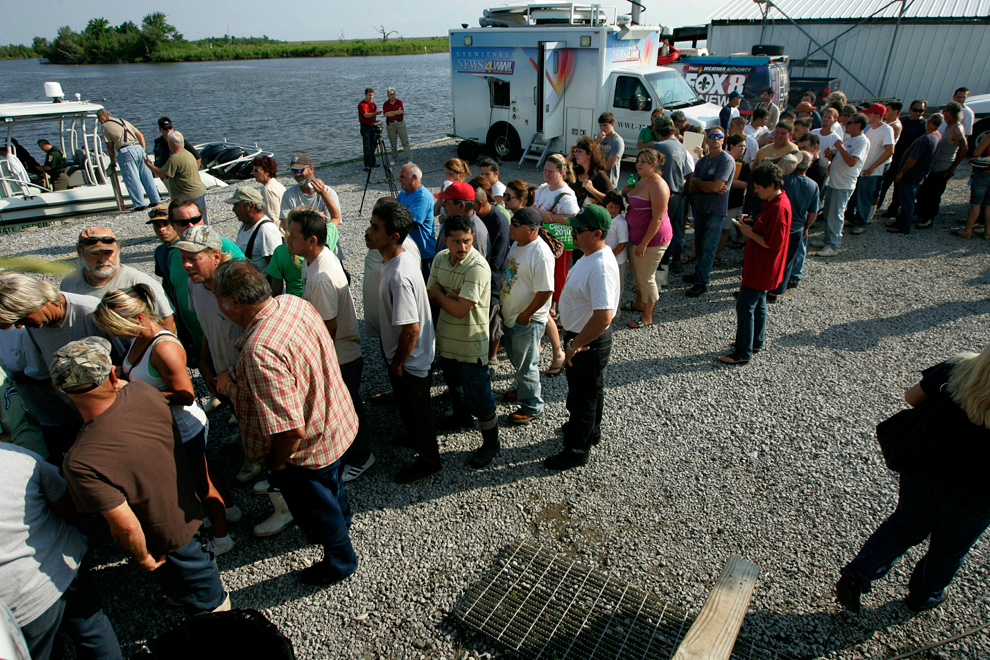
Unemployed commercial fishermen and their families wait in line to receive handouts from New Orleans Catholic Charities on May 5, 2010 in Hopedale, Louisiana. Many local fishermen have been temporarily shut down but have been hired by British Petroleum (BP) to lay oil booms in sensitive areas. (Sandy Huffaker/Getty Images) #

Captain Johnny Bourgeois and deckhand Chris Crappel (left) of Venice, Louisiana retie netting for shrimp trawling as they wait for the shrimp season to reopen in Venice, Louisiana May 9, 2010. Louisiana Department of Wildlife and Fisheries (LDWF) Secretary Robert Barham announced that the shrimp season in the territorial seas of the central coast of Louisiana from Four Bayou Pass to Freshwater Bayou were closed effective sunset Saturday. (REUTERS/Sean Gardner) #

Louisiana National Guard Private Dallas Bacon guides a dump truck as they use dirt to create an earthen barrier as they try to protect an estuary from the massive oil spill on May 10, 2010 in Lafourche Parish, Louisiana. (Joe Raedle/Getty Images) #

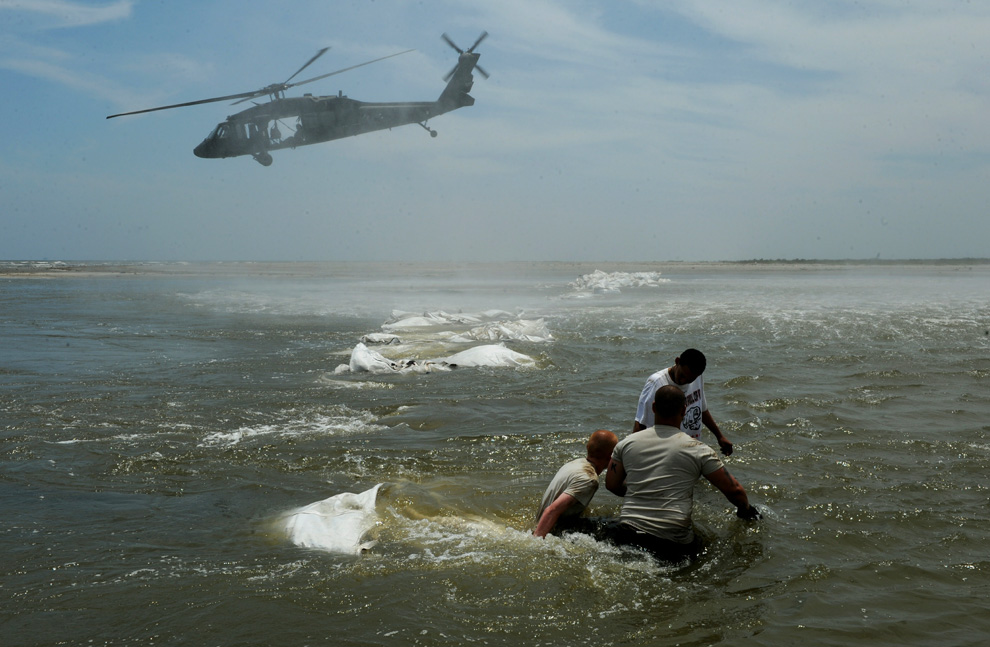
Louisiana National Guardsmen use Blackhawk helicopters to build a dam to protect the fragile wetlands known locally as "Bayou" near the town of Grand Isle, as work continues to protect the coastline from oil after the BP Deepwater Horizon platform disaster off Louisiana, on May 11, 2010. (MARK RALSTON/AFP/Getty Images) #
 11 mentions Retweet  visit my other blog at http://short-stories.posterous.com/ contact me: stillmindster@gmail.com
Related Posts Plugin for WordPress, Blogger...